Deutsch
 English
The Lower Saxony Panel Presents Initial Findings on AI, Climate Protection, and Social Transformation
IMEL at Clausthal University of Technology is participating in the state-wide research project
ransformation
IMEL at Clausthal University of Technology is participating in the state-wide research project
What matters most to people in Lower Saxony? What are their views on climate protection, democracy, and artificial intelligence? Answers to these questions are provided by the Lower Saxony Panel, in which researchers from Clausthal University of Technology and the Institute of Management, Economics and Law are also participating.
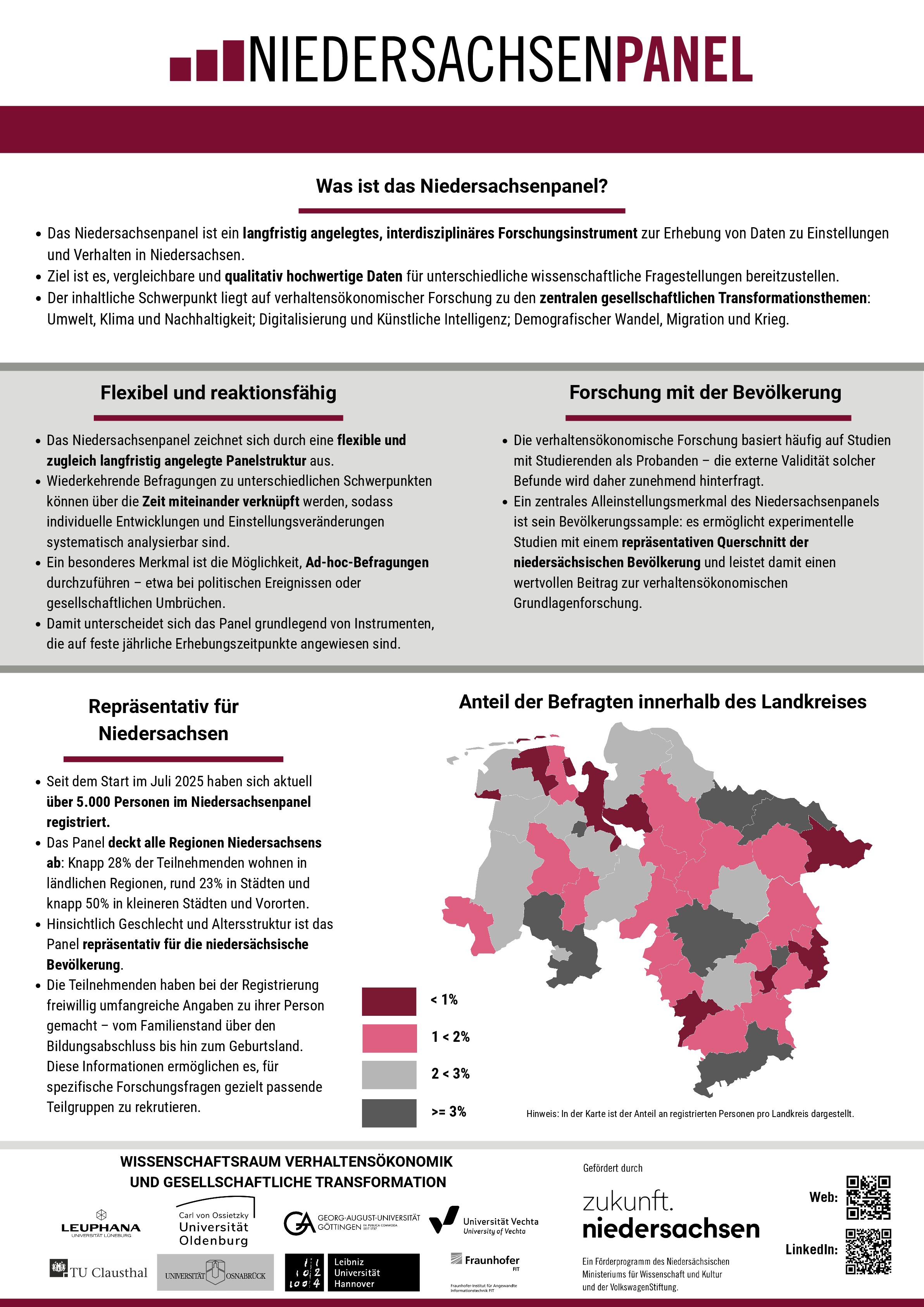
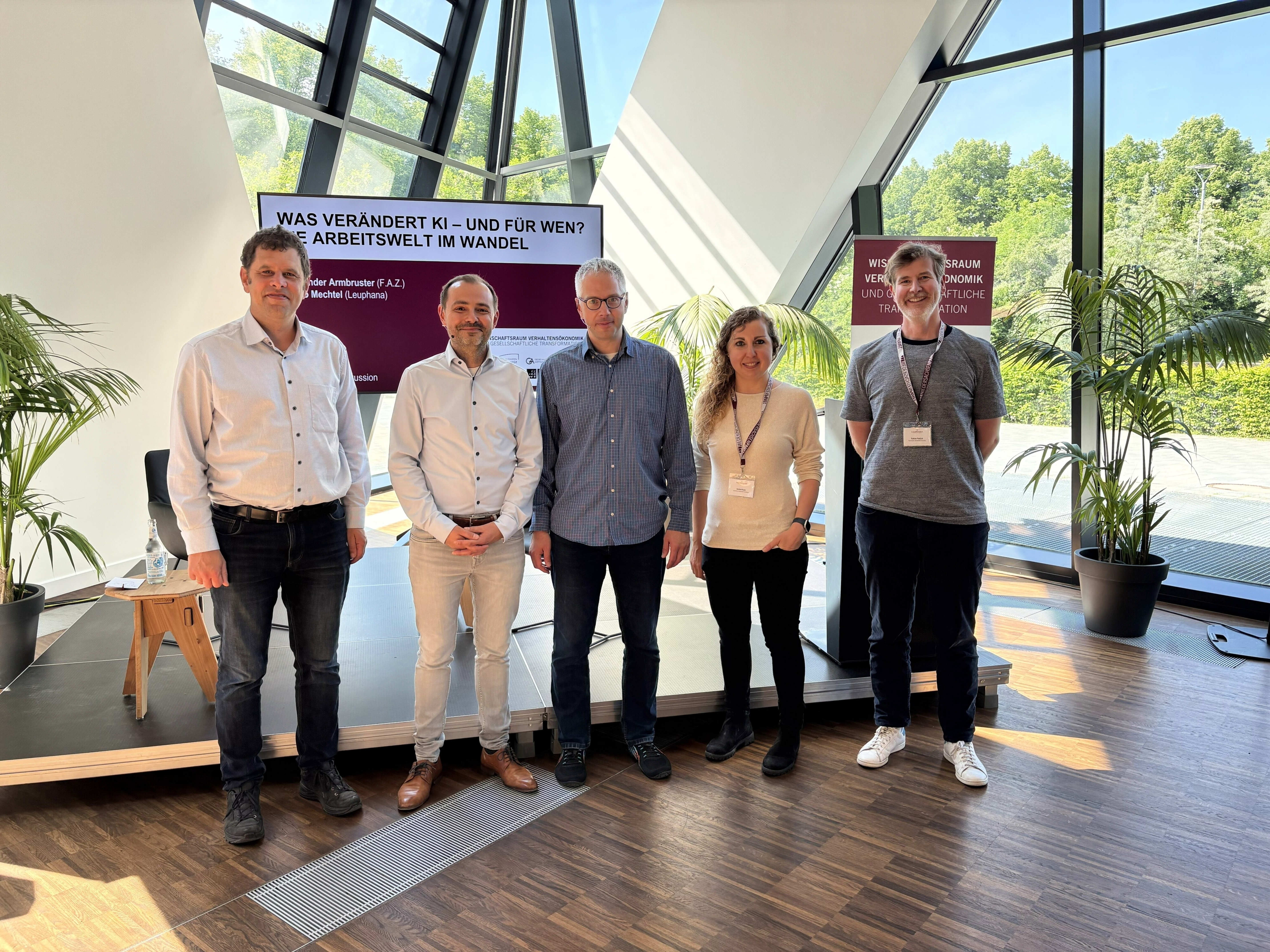
On May 5, 2026, the panel’s initial findings were presented to representatives from politics, academia, and civil society during the workshop “Science Meets Political Practice” at the Leibnizhaus Hannover. The Lower Saxony Panel is a long-term, interdisciplinary research tool that systematically tracks the attitudes, preferences, and behaviors of the population in Lower Saxony. Since its launch in July 2025, more than 5,000 participants have registered.
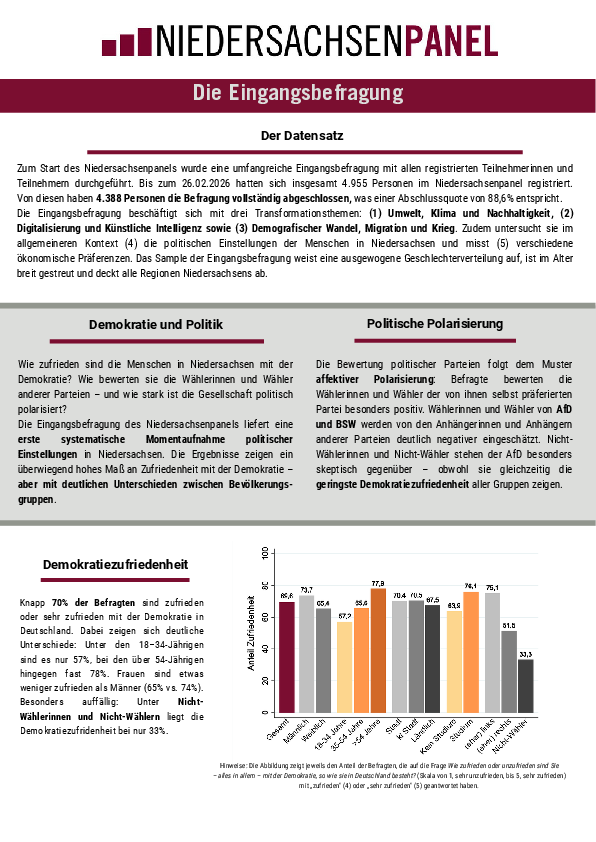
The initial survey, conducted from August 2025 to March 2026, provides initial insights into key societal issues of the future: political attitudes and satisfaction with democracy, views on climate change and sustainability, as well as the use and perception of artificial intelligence.
A recent survey shows, among other things, that artificial intelligence has become part of everyday life for many people in Lower Saxony. A total of 43.6 percent of respondents say they use AI regularly for everyday tasks. At the same time, AI remains a source of uncertainty for many people. The picture is also nuanced when it comes to climate change: 83.4 percent of respondents agree with the statement that the future of the economy must be climate-neutral. However, there are still significant gaps in knowledge regarding specific climate policy instruments such as the carbon price.
“The Lower Saxony Panel offers a unique opportunity to scientifically observe societal attitudes toward key issues of the future over an extended period of time. Especially for topics such as sustainability, climate protection, and transformation, it is important to understand the expectations, concerns, and willingness to act that exist among the population,” says Prof. Dr. Heike Schenk-Mathes.
For IMEL, participation in the Lower Saxony Panel is an important contribution to interdisciplinary transformation research. The topics examined in the panel—such as climate change, sustainability, digitalization, artificial intelligence, and economic transformation processes—are closely aligned with the institute’s profile.
“For Clausthal University of Technology, participation in the Lower Saxony Panel is an important contribution to interdisciplinary transformation research. The findings provide valuable insights for academia, politics, and society, and demonstrate how economic, technological, and social developments must be considered together,” emphasizes Prof. Dr. Fabian Paetzel.
In addition to presenting initial study results, the workshop discussed which additional topics could be included in the Lower Saxony Panel in the future and how scientific findings can be used for evidence-based policymaking. The exchange between academia, politics, and society is a central goal of the project.
The Lower Saxony Panel is part of the research cluster “Behavioral Economics and Social Transformation” and is funded under the zukunft.niedersachsen program. The project is supported by seven universities in Lower Saxony as well as the Fraunhofer Institute for Applied Information Technology FIT. In addition to Clausthal University of Technology, the participating institutions include the University of Göttingen, Leibniz University Hannover, Leuphana University Lüneburg, Carl von Ossietzky University of Oldenburg, the University of Osnabrück, and the University of Vechta.
Registration with the Lower Saxony Panel remains open to individuals with primary residence in Lower Saxony at www.niedersachsenpanel.de.