Deutsch
 English
Interdisciplinary research into the energy systems of the future
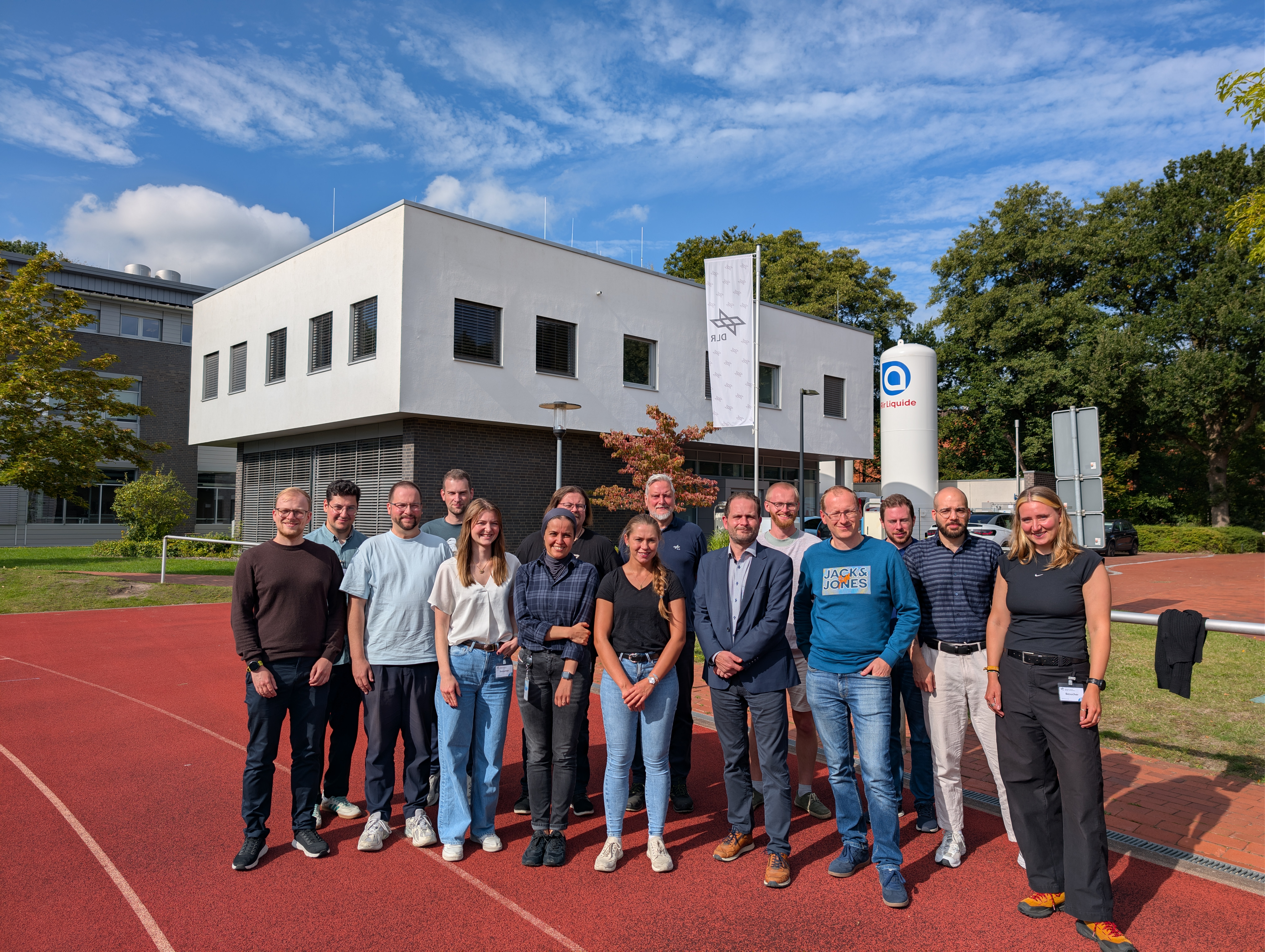
IMEL researchers at the TEN.efzn research project workshop in Oldenburg
How can renewable energy be shared? What legal framework is required for this? And what role can artificial intelligence play in future energy systems?
Researchers from the ‘Trustworthy Digitalisation of Security-Critical Energy Systems’ platform, part of the TEN.efzn energy research project, addressed these and other questions on 14 and 15 September 2026 at the German Aerospace Centre (DLR) in Oldenburg.
Bora Kocaoglu and Jan Schlüpmann from the Department of German and International Mining and Energy Law at the Institute of Management, Economics and Law (IMEL) at Clausthal University of Technology, headed by Prof. Dr Hartmut Weyer, also took part in the two-day working meeting.
Focus on Energy Sharing
Particular emphasis was placed on what is known as ‘energy sharing’. This refers to the shared use of electricity from renewable energy plants, involving the public electricity grid. The legal framework for this is governed, amongst other things, by Section 42c of the Energy Industry Act (EnWG).
In the Energy Sharing working group, the participating researchers discussed current issues, agreed on the next steps and worked on a joint interdisciplinary scientific publication, which has been in preparation for several months.
Energy Sharing highlights particularly clearly how closely technical possibilities and legal frameworks are interlinked. Interdisciplinary exchange therefore plays a vital role in bringing together different perspectives and jointly developing solutions that not only work technically but are also legally and practically feasible.
Other topics covered during the exchange included the use of artificial intelligence in the field of voltage transformers, as well as the practical implementation of electricity balancing in models for the shared use of domestic energy storage systems.
Developing solutions together
Alongside the technical discussions, the focus was on the further development of joint research scenarios, collaboration between the various disciplines, and new approaches to knowledge transfer.
Technical demonstrations, laboratory tours and expert discussions provided further insights and opened up opportunities to develop new research questions and collaborations. In particular, it became clear that applications of artificial intelligence are becoming relevant to an ever-increasing number of areas within energy systems research.
The working meeting highlighted how important close collaboration between technical and legal disciplines is for shaping the future energy supply. In this regard, IMEL contributes, in particular, its expertise in energy and regulatory law.
This interdisciplinary exchange will continue at the TEN.efzn Annual Conference on 23 and 24 November 2026, where researchers from all participating research platforms will come together.